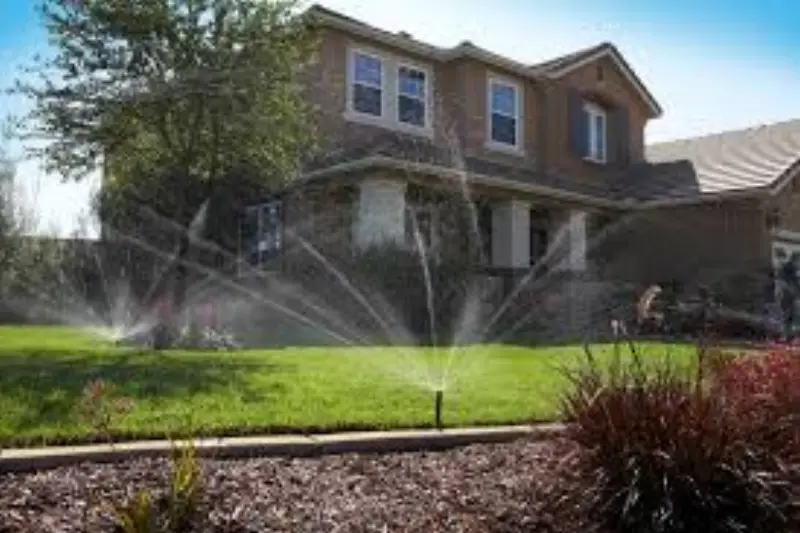
Smart irrigation technology reduces outdoor water consumption by an average of 20%, according to the U.S. Environmental Protection Agency (EPA). For Colorado properties facing semi-arid conditions, summer watering restrictions, and rising water costs, that savings translates directly to lower utility bills and healthier landscapes. This guide explains the three categories of smart controllers, the sensor add-ons that extend their effectiveness, and the Colorado-specific factors that make smart irrigation essential rather than optional.
Why Smart Irrigation Matters in Colorado
Colorado receives an average of 15 to 17 inches of annual precipitation along the Front Range, according to the Colorado Climate Center at Colorado State University (CSU). That figure is roughly one-third of what turfgrass and ornamental plantings require during a typical growing season. The deficit must be covered by supplemental irrigation, making water efficiency a primary operating cost for property managers.
Several factors compound the challenge. The Denver Metro area enforces mandatory watering schedules from May through October, typically limiting irrigation to three days per week. Douglas County and many metro-area municipalities have adopted tiered water pricing that penalizes overuse. Meanwhile, Colorado's population growth continues to increase demand on the same finite water supply.
A smart irrigation system addresses these constraints by applying water based on actual landscape need rather than a fixed clock schedule. The result is less runoff, less waste, and healthier plant material that receives water at the right time and in the right amount.
Three Types of Smart Irrigation Controllers
The EPA's WaterSense program certifies irrigation controllers that meet specific performance benchmarks. These controllers fall into three categories, each using a different method to determine irrigation schedules.
Signal-Based Controllers
Signal-based controllers receive evapotranspiration (ET) data from regional weather stations via satellite, cellular, or internet connection. The controller adjusts run times daily based on temperature, humidity, solar radiation, and wind speed reported for the local area. This approach requires no on-site weather equipment and works well for properties within a few miles of a reporting station.
For most Denver Metro commercial properties, signal-based controllers provide a strong balance of accuracy and simplicity. The ET data from Denver International Airport and other NOAA reporting stations is readily available, and the controller adjusts automatically as conditions change throughout the season.
Historic ET Controllers
Historic ET controllers use long-term average weather data for a specific ZIP code or climate zone. The controller is pre-programmed with monthly ET values based on 30-year climate normals. Property managers enter soil type, plant material, slope, and sun exposure for each irrigation zone, and the controller calculates run times accordingly.
While less responsive to real-time weather swings than signal-based controllers, historic ET systems are reliable in Colorado's predictable semi-arid climate and require no ongoing data subscription. They perform best when paired with a rain sensor that overrides scheduled irrigation after precipitation events.
On-Site Weather Measurement Controllers
The most precise option, on-site weather measurement controllers use a dedicated weather station installed at the property. The station measures temperature, humidity, rainfall, solar radiation, and wind speed in real time. The controller calculates site-specific ET values and adjusts every zone independently.
This category is best suited for large commercial campuses, HOA common areas, and multi-building properties where microclimates vary across the site. The higher upfront cost is offset by the granularity of water savings, particularly on properties with diverse plantings, mixed sun and shade exposures, or significant elevation changes.
Add-On Sensors That Improve Performance
Regardless of the controller type, add-on sensors extend efficiency by providing additional data points. The EPA recommends pairing smart controllers with at least one sensor type for optimal water savings.
Rain and Freeze Sensors
Rain sensors are the most common and cost-effective add-on. They interrupt irrigation when rainfall reaches a set threshold, typically 0.125 to 0.25 inches. Freeze sensors suspend irrigation when temperatures drop below 37 degrees Fahrenheit, preventing ice formation on walkways and hardscapes. Colorado's Front Range sees freeze events well into May and as early as September, making freeze sensors a practical necessity.
Soil Moisture Sensors
Soil moisture sensors measure volumetric water content at root zone depth, typically 4 to 6 inches for turf and 8 to 12 inches for shrubs and trees. When soil moisture exceeds the set threshold, the sensor signals the controller to skip the scheduled irrigation cycle. This approach is particularly effective in Colorado's clay-heavy soils, which retain moisture longer than sandy soils and are prone to waterlogging if over-irrigated.
Wind Sensors
Wind sensors pause irrigation when wind speeds exceed a set limit, usually 10 to 15 mph. Colorado's Front Range frequently experiences sustained afternoon winds, and irrigating during high-wind periods can reduce sprinkler distribution uniformity by 30% to 50%, according to the Irrigation Association. Pausing irrigation during wind events prevents overspray, reduces water waste, and maintains even coverage.
Flow Sensors
Flow sensors monitor water volume passing through the main irrigation line. They detect main line breaks, stuck valves, and cracked lateral pipes by comparing actual flow to expected flow for each zone. A flow sensor can shut down the system within seconds of detecting a major leak, preventing property damage and thousands of gallons of water loss. For commercial properties, flow sensors also provide usage data that simplifies water budget tracking and reporting.
Colorado-Specific Installation Considerations
Colorado's climate introduces several factors that affect smart irrigation system design and installation.
- Winterization is mandatory. All irrigation systems in the Denver Metro area must be blown out before the first hard freeze, typically by mid-October. Smart controllers should be set to a rain delay or off mode during winter, and on-site weather stations should be protected or removed. JLS Landscape offers complete sprinkler blowout services to protect your system through the winter months.
- High altitude affects ET rates. Denver sits at 5,280 feet, and much of Douglas County ranges from 5,800 to 7,000 feet. Higher altitude means more intense solar radiation and faster evapotranspiration. Controllers must be calibrated for the actual elevation of the property, not the default sea-level settings.
- Soil variability requires zone-by-zone configuration. Front Range soils range from heavy clay in the eastern plains to sandy loam near the foothills. A single property can have multiple soil types across different zones. Each zone should be configured independently in the controller with accurate soil infiltration rates to prevent runoff and deep percolation losses.
- Municipal rebate programs offset costs. Denver Water, Castle Rock Water, and several Douglas County providers offer rebates for WaterSense-certified smart controllers and rain sensors. Rebate amounts vary but typically cover 25% to 50% of the equipment cost. Check with your local water provider before purchasing.
Practical Steps for Property Managers
Upgrading to smart irrigation does not require replacing your entire system. In most cases, the existing valves, pipes, and sprinkler heads remain in place. The controller swap is the primary change, and sensor add-ons connect to existing wiring.
- Audit the current system. A professional irrigation audit identifies broken heads, misaligned nozzles, pressure issues, and coverage gaps that waste water regardless of the controller type. Fix mechanical problems first.
- Select the right controller category. For most commercial properties in the Denver Metro area, a signal-based controller provides the best combination of accuracy, ease of use, and cost. Properties over 5 acres or with complex microclimates should evaluate on-site weather measurement systems.
- Add at minimum a rain and freeze sensor. This is the single most cost-effective upgrade. Many Colorado municipalities now require rain sensors on new irrigation installations.
- Configure each zone independently. Enter accurate soil type, plant material, slope, and sun exposure for every zone. Generic default settings waste water.
- Schedule seasonal check-ups. Smart controllers reduce waste, but they still require professional maintenance. Spring activation, mid-season head adjustments, and fall blowout are essential. JLS provides comprehensive sprinkler repair and maintenance throughout the growing season.
JLS Landscape: 50+ Years of Water-Smart Irrigation
Since 1975, JLS Landscape & Sprinkler has designed, installed, and maintained irrigation systems across Denver Metro and Douglas County. Our team holds LICT (Landscape Industry Certified Technician) and LEED AP credentials, and we have helped commercial properties, HOAs, and metro districts save hundreds of thousands of gallons of water through smart irrigation retrofits and proper system maintenance.
Whether you need a controller upgrade, a full system audit, or seasonal maintenance, our irrigation specialists can evaluate your property and recommend the most cost-effective path to lower water use and healthier landscapes.